

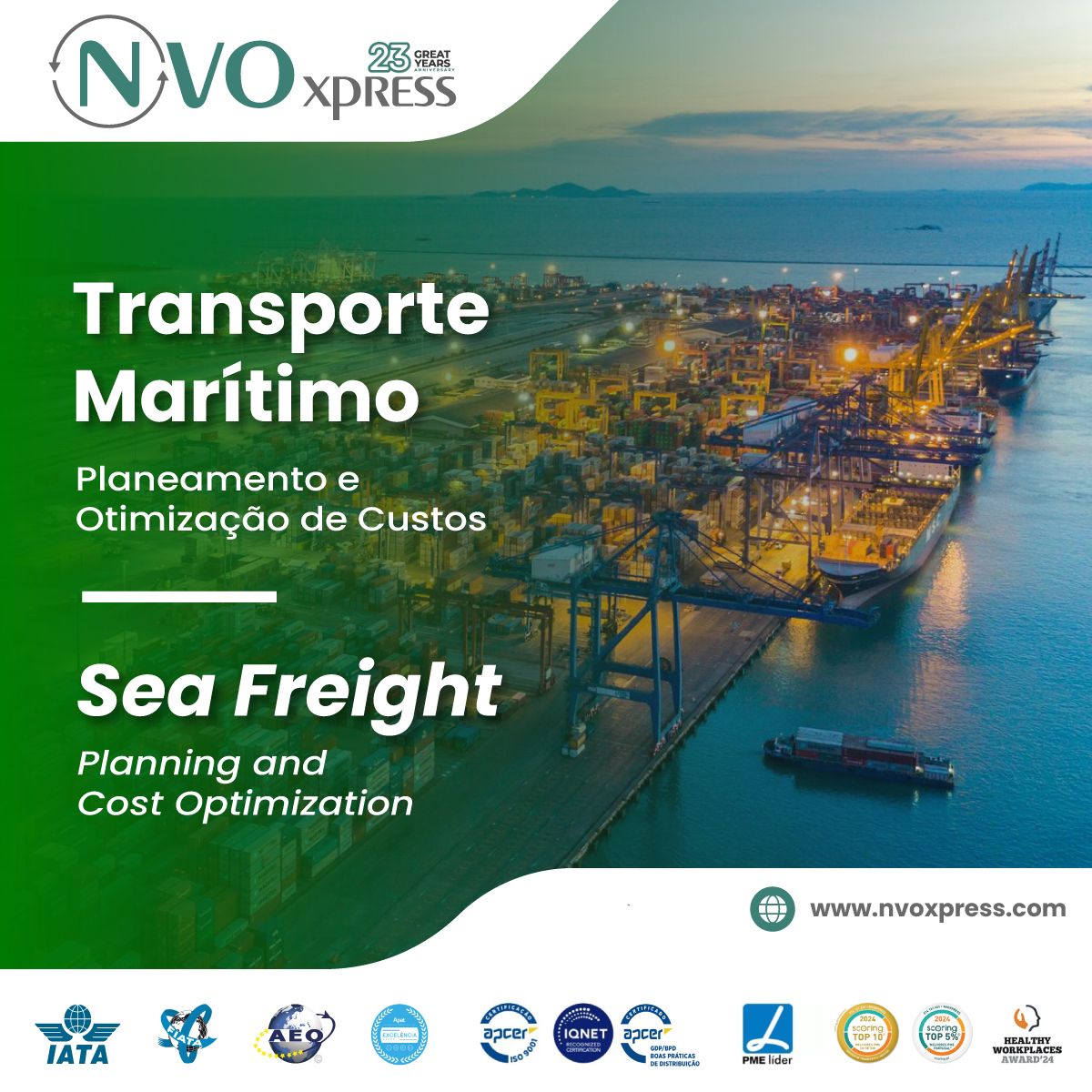
Sea Freight: Planning and Cost Optimization in International Operations
Sea freight remains one of the fundamental pillars of international trade, being responsible for moving a large share of goods circulating between continents.
Its relevance lies not only in its ability to transport large volumes of cargo, but also in the economic efficiency it offers for long-distance operations.
However, optimizing costs in maritime transport increasingly depends on careful logistics planning and efficient management of the different variables that influence each operation.
The Importance of Logistics Planning
A sea freight operation involves multiple factors that can directly influence costs and delivery times.
Among the key elements to consider are:
selection of the most appropriate maritime route
choice of carrier and shipping service
planning of transit times
management of port calls and connections
coordination with inland transport and port operations
A proper analysis of these factors helps reduce operational risks and avoid additional costs associated with delays or disruptions in logistics operations.
Costs Associated with Sea Freight
Although sea freight is often considered one of the most cost-effective solutions in terms of cost per volume transported, several elements may influence the final cost of an operation.
Among the most relevant costs are:
ocean freight
surcharges applied by shipping lines
port and terminal handling charges
storage costs
documentation and customs clearance expenses
Efficient management of these factors requires knowledge of the international logistics market and continuous monitoring of operational conditions.
Optimizing Maritime Operations
Cost optimization in sea freight often involves a global analysis of the logistics chain.
Choosing the appropriate type of service — such as full container loads (FCL) or consolidated shipments (LCL) — can have a significant impact on both cost and operational efficiency.
Likewise, planning shipments in advance allows greater flexibility in selecting routes and available services.
An integrated approach that considers sea freight, port operations, customs clearance and final distribution helps improve the overall efficiency of the logistics chain.
Planning as a Competitive Advantage
In an increasingly competitive international trade environment, the ability to plan logistics operations efficiently has become a key factor for business competitiveness.
Effective sea freight management not only optimizes costs but also improves operational predictability and reduces risks related to delays or operational constraints.
At NVOxpress, each maritime operation is analysed in an integrated way, considering cargo characteristics, client requirements and international logistics market conditions.
Because in global trade, logistics efficiency starts with planning.