

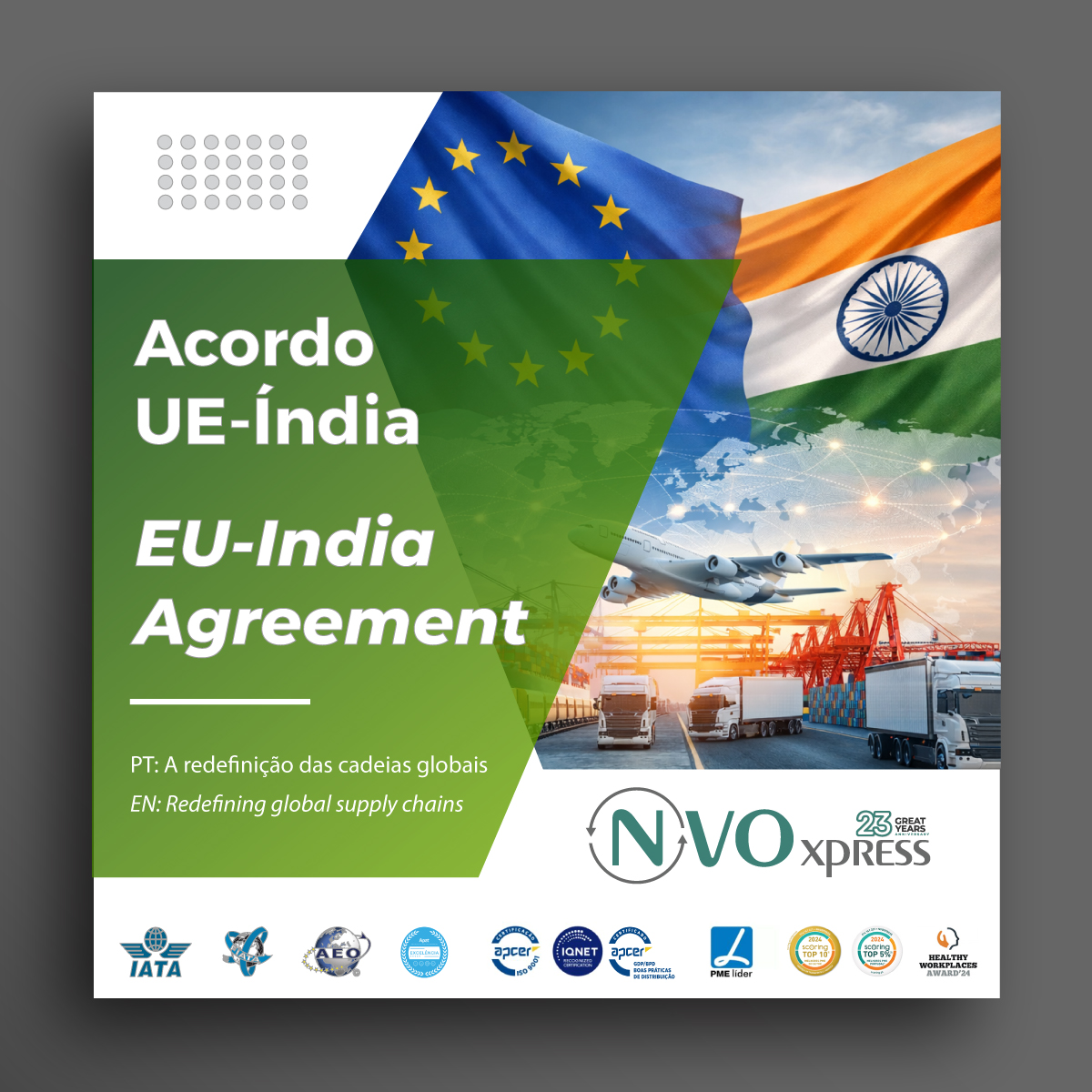
EU–India Agreement: a new strategic framework for international trade and logistics
Negotiations between the European Union and India represent a significant step in the reconfiguration of international trade. In a global context marked by geopolitical uncertainty, pressure on supply chains and the need to diversify markets, this understanding gains particular relevance for companies and economic operators.
India has increasingly established itself as one of the main drivers of global economic growth, combining industrial capacity, technological development and a large domestic market. For the European Union, strengthening this relationship represents a clear opportunity to reduce excessive dependencies and create more balanced trade axes.
Impact on supply chains and logistics
The consolidation of EU–India relations may accelerate the reorganisation of global supply chains, with a direct impact on maritime, air and multimodal transport flows. For exporters and importers, this new scenario requires enhanced planning, route reassessment and adaptation of logistics strategies, seeking more resilient, predictable and efficient solutions.
At the same time, the evolution of the customs and regulatory framework may gradually contribute to greater predictability in import and export processes, reducing administrative barriers and indirect costs associated with delays or non-compliance.
The importance of specialised monitoring
In an international environment in constant change, closely and knowledgeably monitoring these developments is essential for sound decision-making.
NVOxpress continuously monitors the evolution of this framework, analysing its potential impacts on international transport, logistics flows and operational procedures. This approach enables the company to support its clients in adapting their operations, anticipating risks and identifying opportunities in a transforming commercial landscape.
A context of opportunities and challenges
While this new economic axis opens up relevant opportunities, it also requires preparation. Regulatory, cultural and operational differences remain critical factors for companies seeking to operate or expand into this market. Organisations that position themselves strategically, with proper planning and the right partners, will be better prepared to turn this new framework into a competitive advantage.