


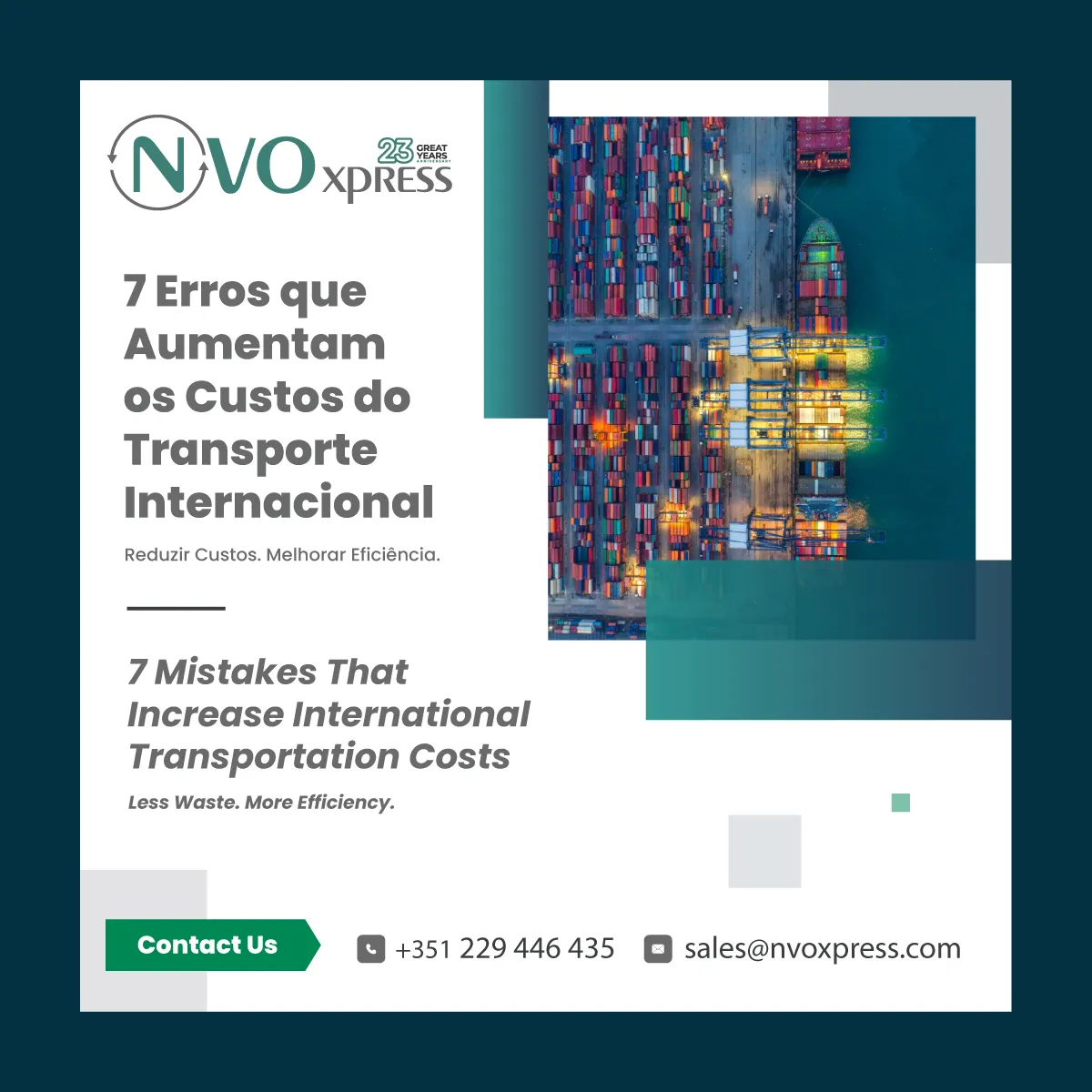
7 Mistakes That Increase International Transportation Costs
In an increasingly competitive global market, controlling logistics costs has become a priority for companies involved in importing and exporting goods.
However, many businesses still focus solely on transportation rates, overlooking factors that can generate significantly higher costs throughout the entire operation.
Delays, incorrect documentation, poor planning or unsuitable transportation choices are just a few examples of situations that can compromise logistics efficiency and reduce profitability.
Discover the 7 most common mistakes that increase international transportation costs and learn how to avoid them.
1. Choosing Transportation Based Only on Price
Selecting the cheapest option does not always mean saving money.
A seemingly low-cost solution may involve longer transit times, a higher risk of delays, additional charges or reduced operational flexibility.
The choice of transportation mode should consider delivery deadlines, destination, cargo type and the overall impact on the operation.
2. Lack of Logistics Planning
Last-minute logistics operations often generate higher costs.
Urgent bookings, limited space availability, last-minute changes or the need for alternative solutions can significantly increase transportation expenses.
Proper planning allows for better negotiation opportunities and more efficient resource management.
3. Incomplete or Incorrect Documentation
Many delays in international operations are caused by documentation errors.
Commercial invoices, packing lists, certificates or customs documentation that are incorrectly prepared can result in cargo holds, inspections and unexpected costs.
Documentation accuracy is essential for maintaining efficient operations.
4. Incorrect Incoterms Selection
Incoterms define responsibilities, costs and risks between buyers and sellers.
An unsuitable choice can lead to unexpected expenses, operational difficulties or poorly allocated responsibilities.
Understanding the impact of Incoterms is essential to avoid unnecessary costs.
5. Failure to Consolidate Shipments
Many companies transport small volumes without assessing consolidation opportunities.
Cargo consolidation allows for more efficient use of available space and can significantly reduce transportation costs per unit.
Analysing shipment frequency and volumes can generate considerable savings.
6. Ignoring Operational Risks
Weather conditions, port congestion, strikes, regulatory changes or customs issues can affect any international operation.
Failing to consider these risks during logistics planning can lead to delays, extraordinary costs and disruptions across the supply chain.
Proactive risk management is critical to operational efficiency.
7. Not Working with a Specialised Logistics Partner
International logistics has become increasingly complex.
Working with an experienced partner helps anticipate challenges, optimise processes, reduce risks and identify opportunities for continuous improvement.
More than simply arranging transportation, a specialised freight forwarder contributes to more efficient and sustainable operations.
How Can You Reduce International Transportation Costs?
Cost reduction is not only about negotiating lower freight rates.
It depends on the ability to plan, analyse and optimise the entire logistics chain.
Companies that invest in planning, documentation accuracy, risk management and expert support generally achieve higher levels of efficiency and predictability.
Conclusion
International transportation costs are influenced by many factors, most of which can be controlled through proper logistics management.
Avoiding these seven mistakes helps reduce waste, improve operational efficiency and increase competitiveness in international markets.
Well-planned logistics is not just about reducing costs. It is also a competitive advantage.